What is the flight range of a drone?
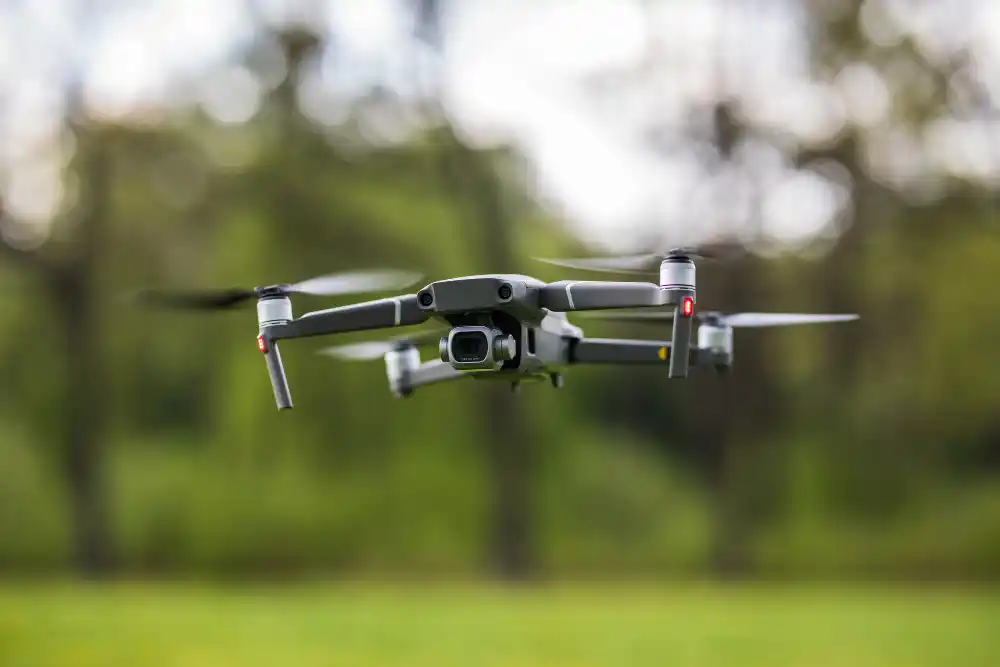
The flight range of a drone is one of the key parameters that directly affects its functionality, safety, and scope of use. It determines how far an unmanned aircraft can move away from the operator while maintaining stable communication, controllability, and the ability to return safely.
Today, quadcopters are used not only for entertainment. They have become tools for aerial photography, surveying, agricultural monitoring, infrastructure inspection, FPV flights, and specialized missions. Therefore, the question of the actual flight range of a drone is of practical importance, not just theoretical.
What the flight range of a quadcopter really means
Flight range is not simply the distance a drone can physically cover. It is the working radius within which the device consistently receives commands, transmits video (if it is FPV or a camera), responds correctly to controls, and has sufficient battery power to return.
Manufacturers often publish maximum values obtained under ideal conditions. In real environments, the actual range is almost always shorter, especially in urban areas or in the presence of radio interference.
What determines the actual flight range
The type of communication between the drone and the remote control has the greatest impact. It is this that most often limits the distance. Modern radio control systems are way better than old Wi-Fi or Bluetooth solutions. Professional models use digital protocols that are super resistant to interference, letting you fly for tens of kilometers.
The second key factor is the battery. Not only its capacity is important, but also the efficiency of the entire power plant. The weight of the battery, the type of cells, the settings of the electronics, and the flight style directly affect how many kilometers the drone can fly on a single charge.
Equally important are aerodynamics, the weight of the aircraft, and the quality of the components. An optimized frame, balanced propellers, and the correct placement of components can significantly reduce energy consumption and increase the actual flight range.
The main factors that determine the flight range of a drone are
- the type and stability of the communication channel;
- battery capacity and condition;
- the total weight and aerodynamics of the quadcopter;
- the quality of antennas and transmission equipment;
- operating conditions (terrain, buildings, weather).
It is the combination of these parameters that determines the final distance, not any single characteristic alone.
What is the flight range of different classes of drones?
Range indicators vary significantly depending on the purpose of the device. Toy and training drones have a minimum range and are designed for flights within direct visibility. Consumer quadcopters with cameras are already capable of flying several kilometers while maintaining a stable video connection.
Professional models are designed to operate over long distances and can perform tasks lasting tens of minutes of flight time. FPV drones occupy a separate niche, as their range is highly dependent on the control system and settings.
Approximate flight range of drones by class
- consumer quadcopters with cameras — 2–10 km;
- professional drones — 10–20 km;
- FPV drones with ELRS or Crossfire — 10–30 km;
- industrial and military drones — tens and hundreds of kilometers.
- These values should be considered approximate, not guaranteed.
Why the stated range differs from the actual range
The stated flight range is a laboratory indicator obtained under ideal conditions: open terrain, no obstacles, minimal radio interference. In a real environment, a drone almost always flies a shorter distance.
In urban conditions, the actual range can be reduced by half or even three times. Therefore, experienced pilots always allow for a margin and focus not on the maximum, but on a safe working distance.
How to actually increase the flight range of a quadcopter
- use high-quality or directional antennas;
- choose modern communication protocols;
- fly in open terrain;
- reduce excess weight;
- monitor battery condition.
Even partial implementation of these solutions can significantly increase the range without serious costs.
The flight range of a drone is the result of the interaction of technical characteristics, operating conditions, and proper configuration. It can be several tens of meters for simple models or reach hundreds of kilometers for specialized unmanned systems.