How do anti-drone guns work?
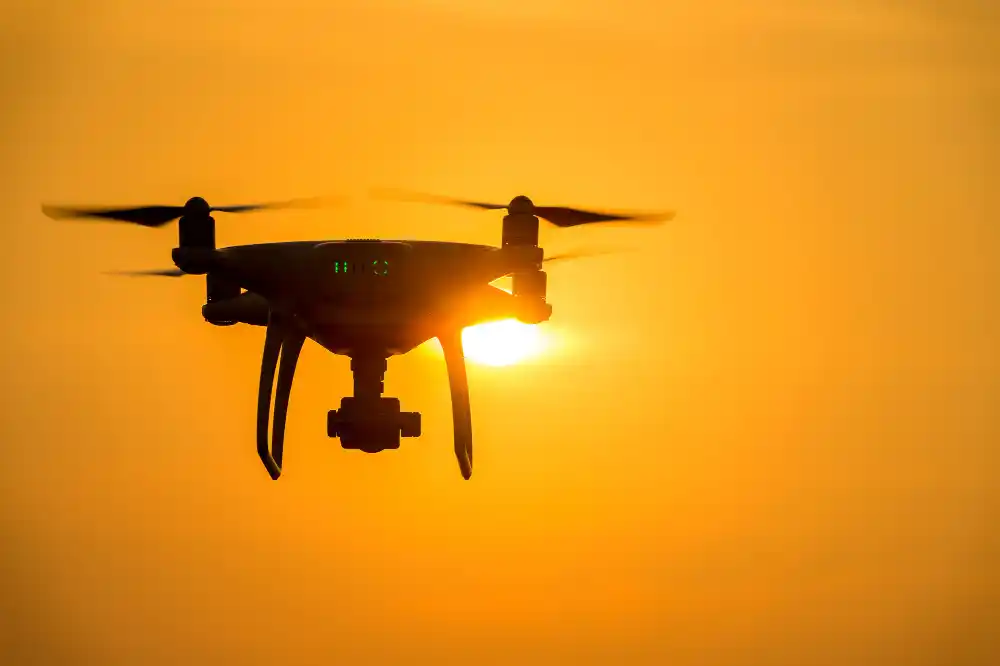
An anti-drone gun is a portable electronic warfare (EW) device designed to quickly suppress or interrupt the control of unmanned aerial vehicles (UAVs). It is also commonly referred to as a “drone jammer,” “jammer,” “anti-drone gun,” or “anti-drone source.” The main goal is to locally deprive the device of communication with the operator or navigation signals, forcing it to make an emergency landing, hover, or return to the starting point.
How an anti-drone gun works
In the most general terms, the gun creates intense electromagnetic interference in the frequency ranges used by drones to transmit control commands, video streams, and/or satellite navigation. When the intensity of the local signal from the jammer exceeds the power of the control or navigation signal, the device loses control or orientation.
Key effects:
- Absorption/blocking of the control channel: video and commands no longer reach the operator.
- GNSS/positioning disruption: navigation is distorted or interrupted (in cases where the device relies on satellite signals).
- Spoofing and interception (at a high level): in some systems, it is possible to transmit fake signals, but this is a specialized operation that goes beyond standard tactical use.
Main components of an anti-drone gun
- Generator/emitter unit — a source of radio signals that creates interference.
- Directional antenna (focusing element) — allows energy to be concentrated in a specific sector (cone) to increase efficiency and reduce collateral damage.
- Power supply unit (battery module) — provides autonomy for field conditions.
- Cooling system — coolers or radiators to maintain stable operation under high loads.
- Controls and indicators — mode switches, voltage/status indicators, safety elements.
- Housing and guidance devices — ergonomic housing (often imitating the shape of a rifle for ease of aiming), sighting elements, or electronic guidance systems.
Advantages of anti-drone guns
- Mobility and operational readiness — a portable device can be quickly deployed on the front line or in a critical infrastructure zone.
- Minimal physical damage — in most cases, the device remains intact and can be used as a source of intelligence.
- Cost-effectiveness — compared to expensive weapons, manufacturing and operation are cheaper.
- Wide range of action — effective against commercial FPV and consumer drones from various manufacturers.
How to choose an anti-drone gun?
When selecting a system, pay attention to:
- Manufacturer reliability and certification (legal manufacturer, availability of technical tests).
- Functional modes (ability to operate in different scenarios).
- Autonomy (actual operating time under typical conditions).
- Ergonomics and weight (ease of carrying and aiming).
- Cooling mechanisms (stability during intensive use).
- Safety mechanisms (protection against accidental activation, status indication).
An anti-drone gun is an effective tactical tool in the system of countering unmanned aerial vehicles. It combines mobility, speed of deployment, and a low probability of physical damage to the target. However, its use requires an understanding of technical limitations, strict compliance with legislation, and appropriate safety measures. For comprehensive protection against UAVs, it is best to use guns as part of a multi-level system — in combination with large stationary electronic warfare systems, detection devices, and organizational measures.