How to fly a drone?
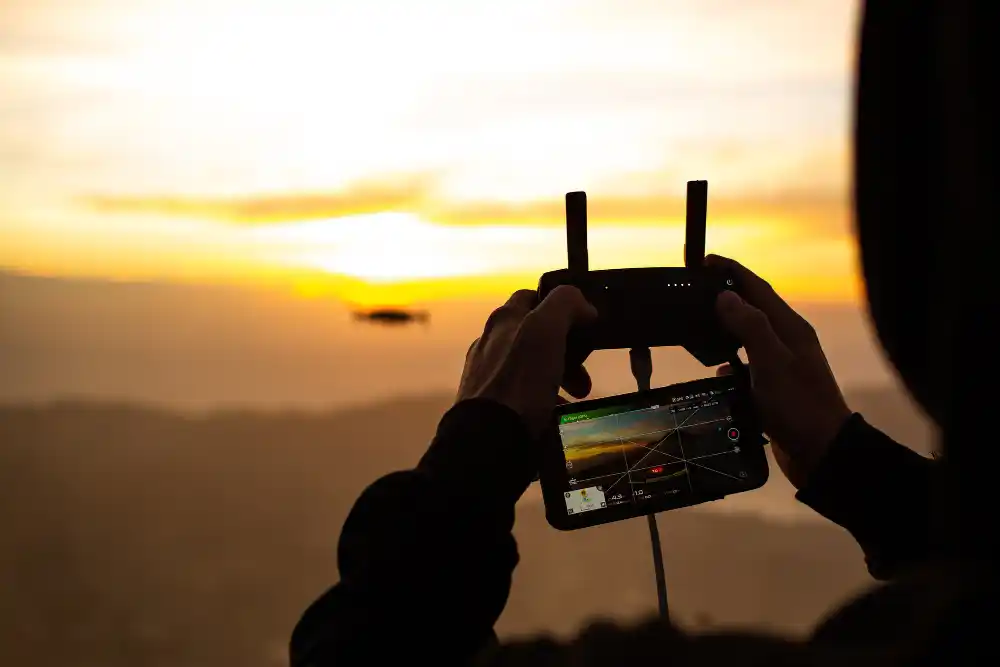
Flying a drone is a skill that combines technical knowledge, coordination, spatial thinking, and discipline. Modern unmanned aerial vehicles are used in video filming, agribusiness, technical inspections, rescue operations, as well as in military and volunteer missions. However, despite its apparent simplicity, learning to fly a quadcopter or FPV drone with confidence takes time, practice, and an understanding of the basic principles.
Let’s take a detailed look at how to fly a drone, what skills are needed, how to prepare for flight, what mistakes to avoid, and how to quickly reach a professional level.
The basics of drone control and how it works
A quadcopter or FPV drone is controlled using a remote control with two sticks (joysticks). Each stick is responsible for a separate axis of movement. Ascent and descent are controlled by the throttle, turns around the axis are controlled by yaw, forward or backward tilt is controlled by pitch, and left and right movement without turning is controlled by roll.
The drone always moves in the direction its “nose” is pointing. This is important to understand because when the aircraft turns, the controls become mirrored, and beginners often get confused.
Modern drones have different flight modes. For beginners, stabilized modes are used, in which sensors automatically level the aircraft. For experienced operators, a fully manual mode is used, where the pilot controls every movement without the help of electronics.
How to learn to fly a drone from scratch
Learning to fly a drone starts with choosing the right equipment. Beginners are advised to use inexpensive training copters or mini-drones so they don’t have to worry about crashes and damage. Expensive professional models should be purchased after mastering the basic skills.
The first training sessions should be conducted in open areas without people, animals, buildings, or power lines. Ideal conditions are a flat area with low grass and no strong winds. Indoors, you can only train with mini-drones.
An important stage is flight simulators. They form muscle memory and allow you to safely practice control. At least 30-50 hours of training in a simulator is recommended before moving on to real FPV flight.
Preparing for your first flight
Before launching the drone, you need to perform a basic technical check. The batteries must be fully charged, the memory card inserted, the propellers undamaged, and the compass and GPS calibrated. Make sure that the flight area is safe and that there are no obstacles to communication with the remote control.
Weather conditions play a critical role. The optimal wind speed is up to 5 m/s. Precipitation and low temperatures can significantly reduce flight time and damage electronics.
Drone flight modes
Stabilized mode is suitable for training. The drone automatically levels itself, and speed and tilt angles are limited. This is ideal for first flights.
Altitude hold mode allows the drone to maintain a set altitude on its own, simplifying control.
GPS mode maintains position in space, which is useful for aerial photography and surveillance.
Acrobatic mode is fully manual control without stabilization. It is used by experienced pilots, including FPV operators. In this mode, the drone does not level itself and requires constant control.
How to professionally control an FPV drone
An FPV drone is a separate category of unmanned aerial vehicles that are controlled through video goggles or a helmet. The pilot sees the image from the drone's camera in real time, creating a first-person flight effect.
To learn FPV, you need a remote control, a simulator, and basic skills in working with sticks. Experienced pilots recommend adjusting the sensitivity of the sticks, dead zones, and throttle curves to suit your own flying style.
The drone is controlled along four main axes: throttle, yaw, pitch, and roll. Smooth turns are performed by combining yaw and roll, which allows you to move in an arc, just like in a real airplane.
Common mistakes made by beginners
Many beginners ignore training in a simulator, which leads to frequent crashes and loss of equipment. Another common mistake is abruptly adding throttle, which causes the drone to jump uncontrollably.
Beginners often do not use yaw for turns, trying to control only with pitch. This makes the flight jerky and unstable. It is also dangerous to fly long distances without experience, as you can lose signal and control of the device.
How to quickly become a professional drone pilot
Professional drone piloting skills are developed through systematic practice. Regular training sessions lasting 30–60 minutes per day yield better results than infrequent, lengthy sessions. It is important to practice takeoffs, hovering, turns, flying along a route, and navigating obstacles.
Experienced operators recommend combining a simulator, real flights, and training with an instructor. This significantly reduces the time it takes to achieve a high level of skill.
Drone control is not just a hobby, but a complex technical skill that opens up a wide range of opportunities in civil and professional fields. From the right choice of equipment and flight mode to discipline, safety, and hundreds of hours of practice — all this shapes a real pilot.
Anyone can learn to fly a drone, but only systematic training, an understanding of flight physics, and a responsible attitude toward safety will allow you to become an expert and confidently fly a quadcopter or FPV drone in any conditions.